

Why Pet Waste Clean Up Is Essential for Your Family and Community
Pet waste clean up is more than just a chore – it’s a critical responsibility that protects your family’s health, preserves local water quality, and keeps your community clean. Whether you’re dealing with one dog or multiple pets, proper waste removal prevents disease transmission and environmental contamination.
Quick Answer for Pet Waste Clean Up:
- Daily removal prevents health risks and lawn damage
- Use biodegradable bags and proper disposal methods
- Professional services start around $12-20 per week
- DIY tools include pooper scoopers, enzymatic cleaners, and gloves
- Legal requirement in most Georgia municipalities with fines up to $250
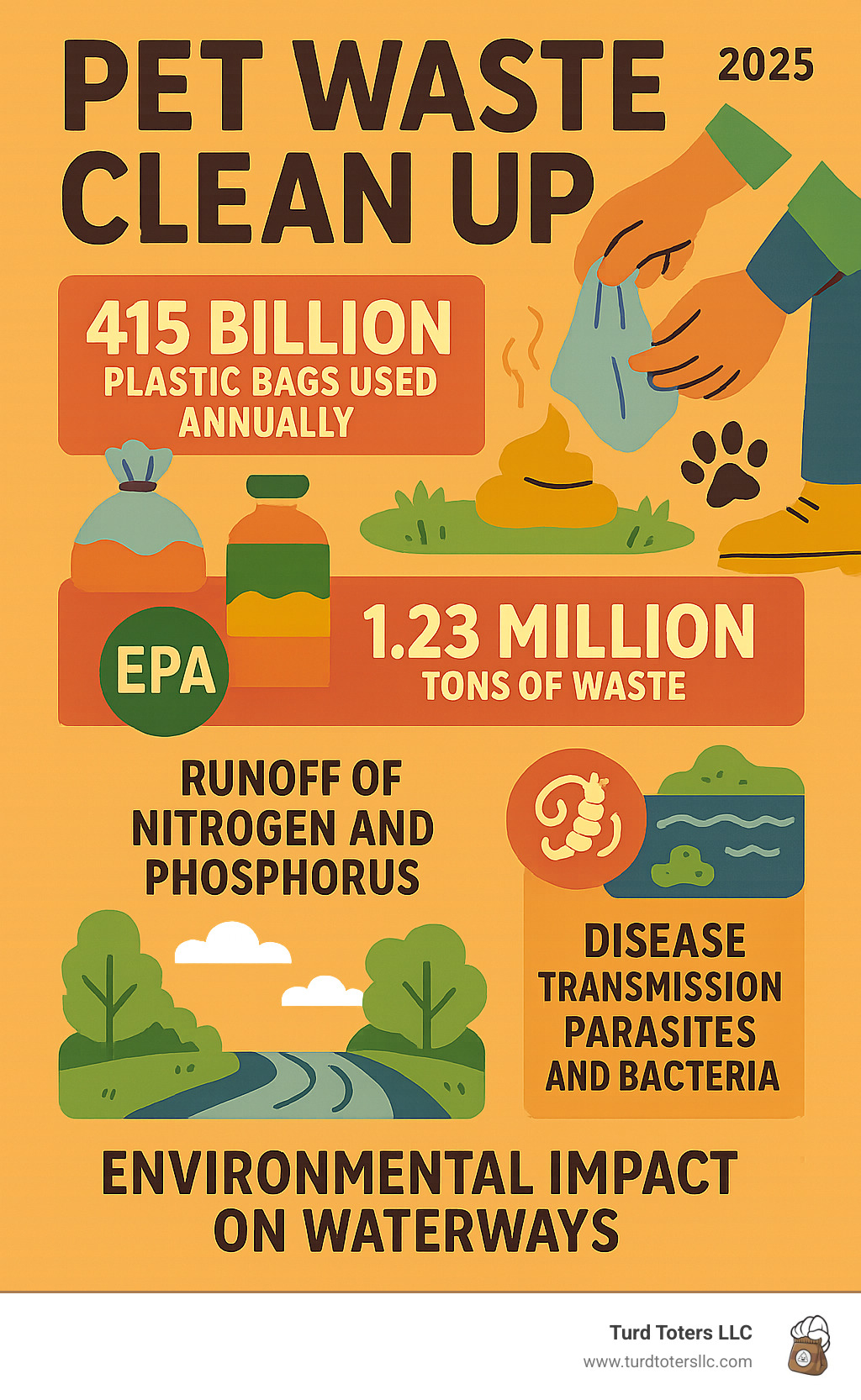
The statistics are staggering: dogs in the United States produce millions of tons of waste annually, with an estimated 16 million dog owners failing to pick up after their pets. According to the EPA, just two to three days of droppings from 100 dogs can contribute enough bacteria, nitrogen, and phosphorus to temporarily close a bay to swimming and shellfishing.
For busy Georgia pet owners, maintaining a clean yard doesn’t have to consume your weekends. This guide covers everything from DIY cleanup strategies and eco-friendly disposal methods to professional services that handle the dirty work for you.
Why Regular Pet Waste Clean Up Matters
The Environmental Protection Agency classifies pet waste as a nonpoint source pollutant, putting it alongside herbicides and insecticides as a serious environmental concern. When pet waste sits in your yard, it becomes a health and environmental hazard.
Pet waste contains high levels of nitrogen and phosphorus that cause lawn burn, creating unsightly brown patches. When it rains, storm water washes pet waste directly into storm drains, flowing into local rivers and lakes without treatment. This contaminated runoff triggers algae blooms that kill fish and make waterways unsafe.
Most Georgia municipalities have pooper-scooper laws with fines ranging from $50 to $250. Beyond legal issues, neglected yards affect neighborhood aesthetics and property values.
Public Health Risks
Pet waste is a disease factory producing dangerous pathogens. Even healthy dogs carry parasites and bacteria that can seriously harm humans. Roundworms are particularly dangerous – their eggs survive in soil for years and easily infect children playing in contaminated areas.
The bacterial threats include E. coli, Salmonella, and Campylobacter. Scientific research on pathogens in dog waste shows these pathogens remain dangerous for months. Giardia forms protective cysts that survive in water sources for months, causing weeks of digestive illness.
Families with young children, pregnant women, or immunocompromised individuals face the highest risks.
Water Quality & Ecosystems
When rain washes waste into storm drains, it carries pathogens and nutrients directly into Georgia’s waterways with zero treatment. The excess nitrogen and phosphorus cause explosive algae blooms that create dead zones unable to support aquatic life.
Scientific research on non-point pollution proves pet waste significantly contributes to watershed contamination. In coastal areas, bacterial contamination forces shellfish closures and beach shutdowns. Water treatment facilities must invest in expensive processing, costs that appear in higher water bills for residents.
Best Practices & DIY Tools for Pet Waste Clean Up
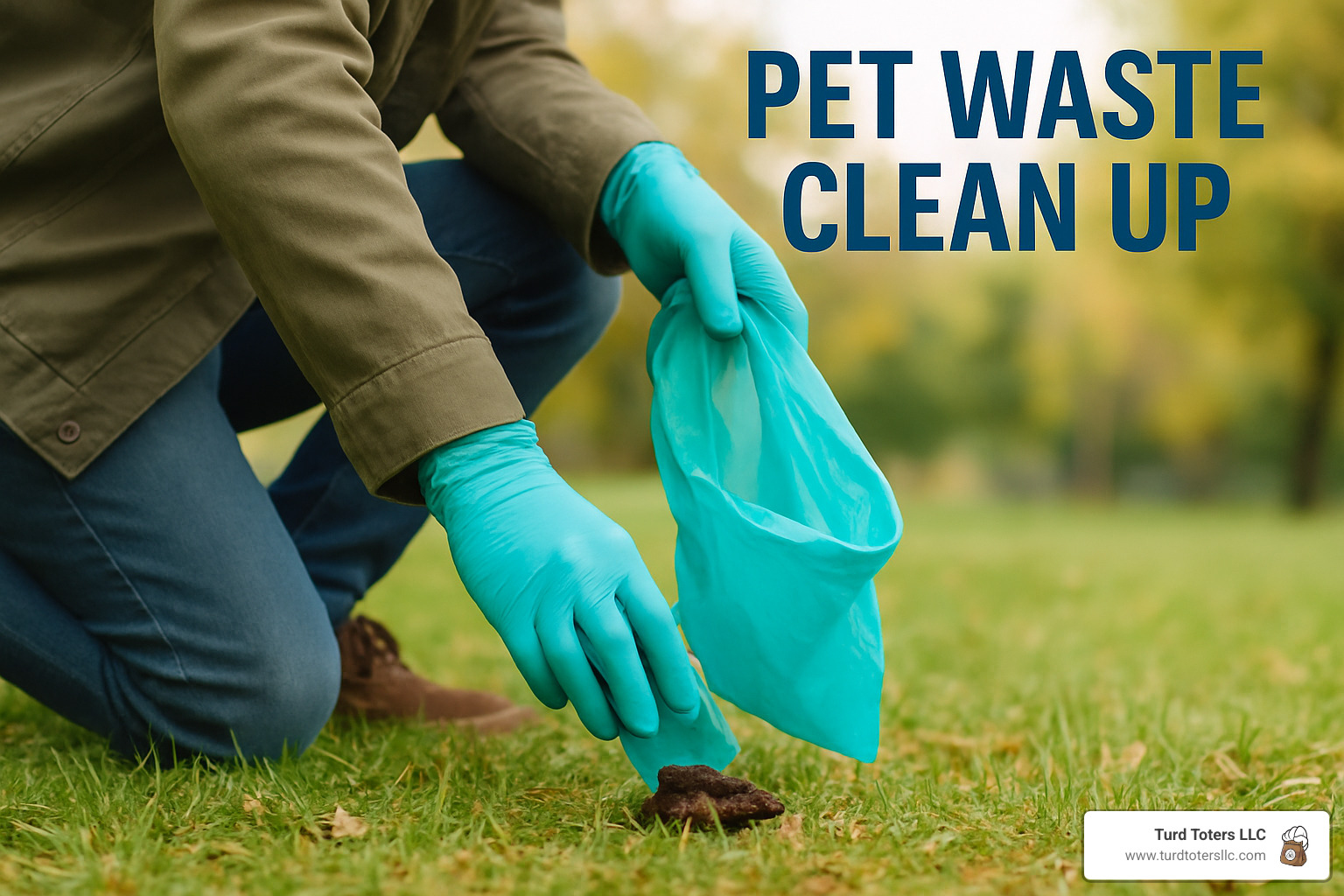
Effective pet waste clean up starts with the right tools and technique. Use the grid-pattern method – walk your yard in overlapping straight lines to ensure complete coverage.
Essential tools include a spring-action pooper scooper, disposable gloves, and enzymatic cleaners that break down organic compounds. Consider creating a designated potty zone in your yard with good drainage, away from play areas.
Setting a Routine for Pet Waste Clean Up
Morning and evening pickups work best for most families. Set smartphone reminders until it becomes habit. Getting the whole family involved with a task rotation ensures consistency.
Watch for your dog’s behavior cues – circling, sniffing, or heading to usual spots – to guide them to appropriate areas.
Essential Tools & Eco-Friendly Bags
Biodegradable bags break down in months instead of decades. A poop bag holder that clips to your leash ensures you’re always prepared during walks.
| Tool Type | Best For | Pros | Cons |
|---|---|---|---|
| Spring-action scooper | Large yards, multiple dogs | No bending, efficient | Initial cost, storage |
| Rake and shovel | Thorough yard cleaning | Complete coverage | More time-consuming |
| In-ground digesters | Eco-conscious owners | Environmentally friendly | Installation required, limited capacity |
Eco-Friendly Yard Hacks
Enzyme sprays continue working after cleanup, breaking down remaining organic matter. Soil aeration in high-traffic areas helps grass recover from nitrogen burn. Training flags help establish clear potty zone boundaries.
Proper Disposal & Green Alternatives
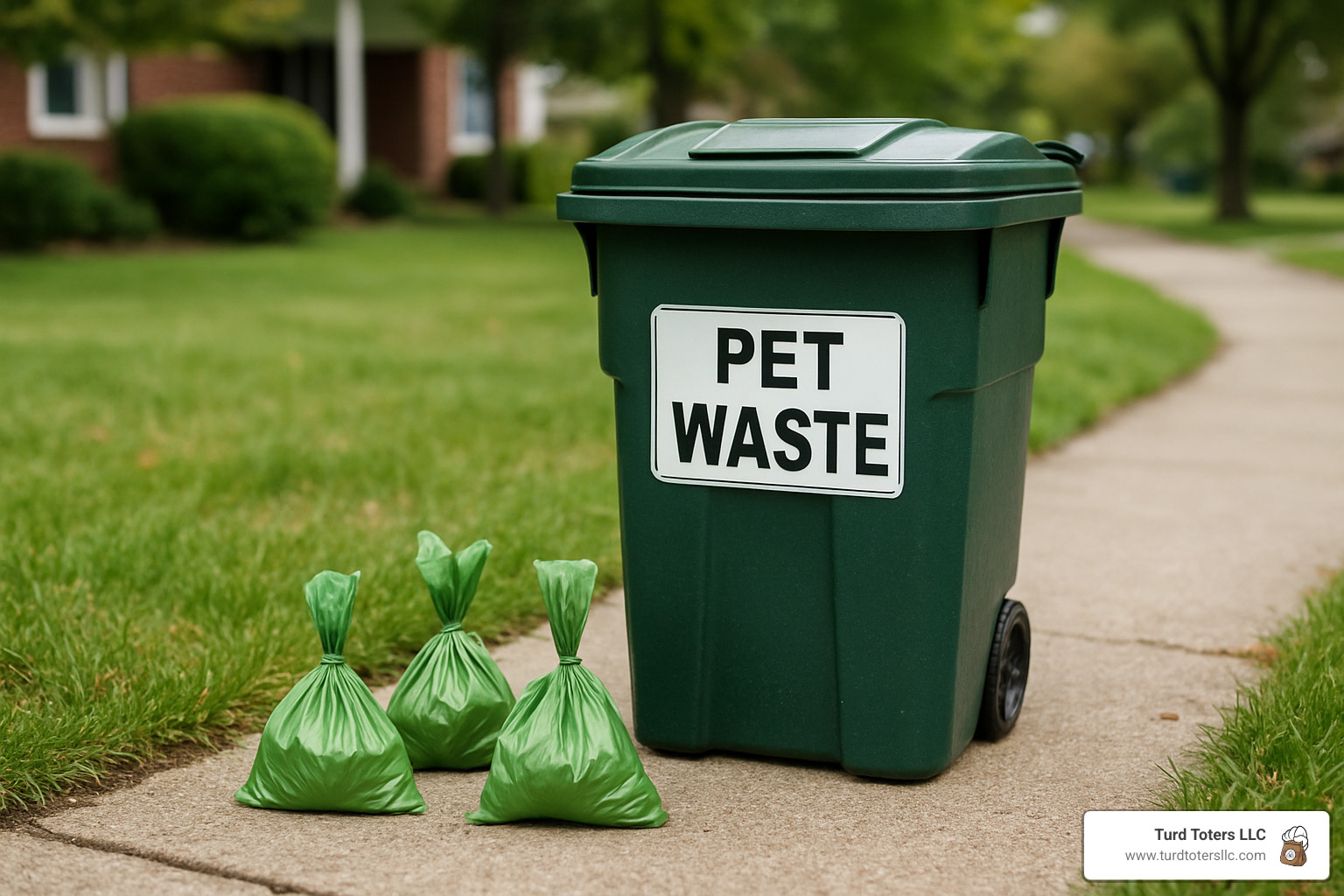
Your household garbage remains the most practical disposal option. Modern waste management systems handle pet waste safely through high-temperature incineration or engineered landfills.
Flushing pet waste is acceptable if you’re connected to municipal sewage treatment, but avoid flushing with septic systems. For outdoor activities, follow Leave No Trace principles – bury waste 6-8 inches deep and 200 feet from water sources.
Trash, Flush, or Compost?
Household garbage works through incineration or engineered landfills. When flushing is appropriate, remove waste from bags first – only flush in areas with proper sewage treatment.
Home composting requires temperatures consistently above 165°F to neutralize pathogens. Most backyard compost piles never reach these temperatures. Professional services like Dog Waste Management Service handle disposal according to safety standards.
Specialized pet waste composters exist but require significant investment. Even properly composted, USDA guidelines recommend against using pet waste compost on vegetable gardens.
Green Alternatives to Plastic Bags
Paper bags offer biodegradable options but lack durability. Compostable bags from plant materials break down in industrial facilities within 90 days. Reusing produce bags gives plastic a second life.
In-ground pet waste digesters function like miniature septic systems, using bacteria to break down waste underground. Enzyme starters boost natural decomposition in designated yard areas.
Hiring a Professional Pet Waste Cleanup Service
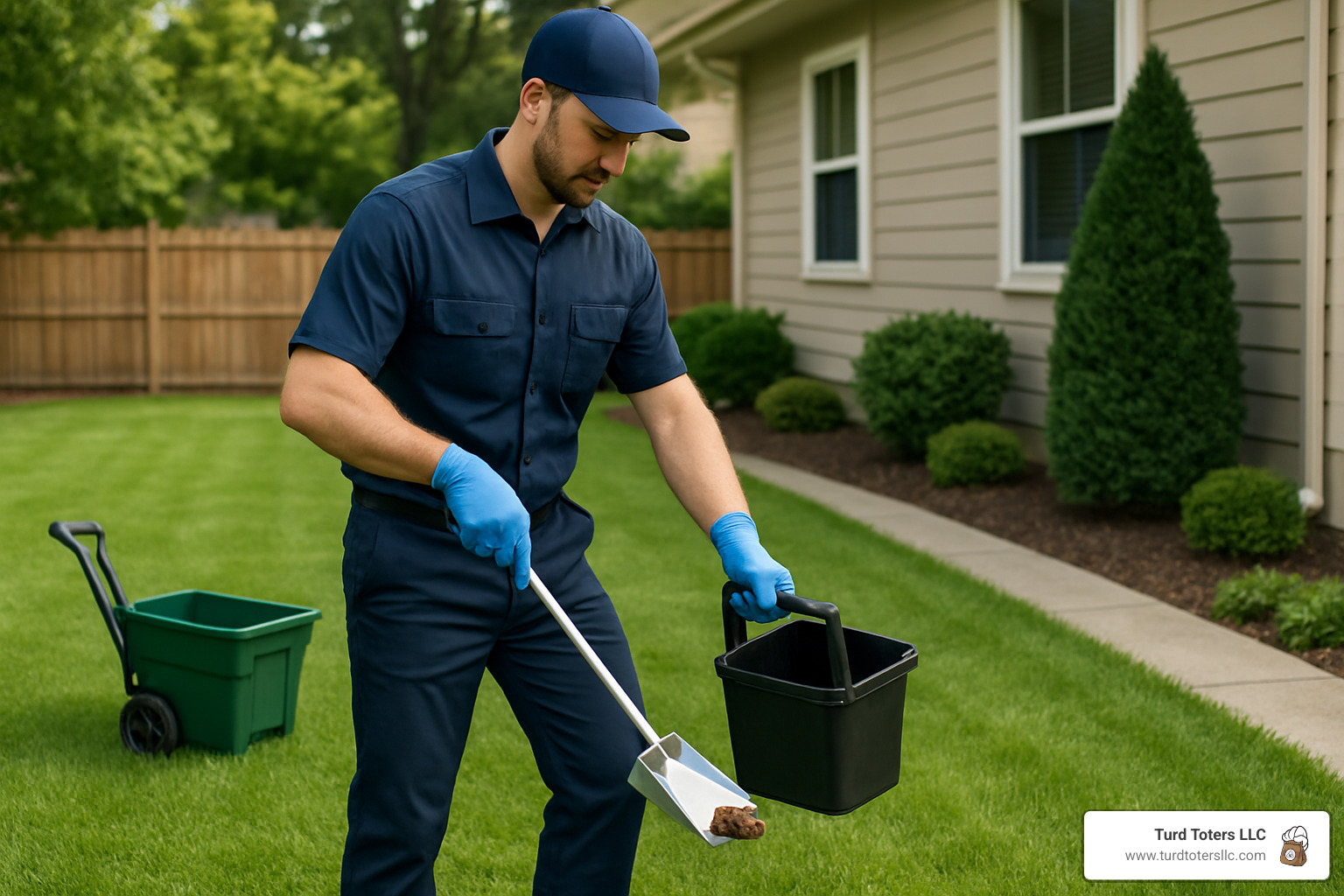
Professional pet waste clean up services transform a dreaded chore into someone else’s problem. These services use commercial-grade equipment, systematic cleaning methods, and proper disposal containers most homeowners lack.
The time savings can be life-changing – the average pet owner spends 30-45 minutes weekly on cleanup. That’s nearly three hours monthly you could spend on activities you enjoy.
What to Expect From a Service
Professional cleanup starts with thorough yard inspection using systematic grid patterns. Technicians check behind bushes, under decks, and in hidden spots where waste accumulates.
Weekly service works best for most families, especially with multiple dogs. Bi-weekly service can work for single-dog households spending significant time indoors.
Many services provide digital updates after visits, including photos and notes about unusual findings. Professional staff undergo background checks and pet behavior training.
More info about Weekly Dog Poop Removal shows how consistent service maintains yard hygiene while returning weekends to busy families.
Cost, Frequency & Value
Professional service typically costs $12-20 per weekly visit for single-dog households. When you consider hourly wages, the service pays for itself by freeing time for valuable activities.
Contract-free plans provide flexibility for vacations and life changes. You can pause service when traveling or adjust frequency as needed.
| Service Option | DIY Cost | Professional Cost | Time Investment |
|---|---|---|---|
| Weekly cleanup | $2-3 in bags | $12-20 per visit | 45 minutes vs. 0 |
| Monthly supplies | $10-15 | Included in service | Shopping time saved |
Benefits Beyond the Backyard
Professional service creates community benefits including well-maintained neighborhoods and HOA compliance. Pest reduction eliminates food sources attracting flies and rodents. Most importantly, it eliminates household stress around this unpleasant but necessary task.
Community & Legal Responsibilities for Pet Waste Clean Up
Most Georgia cities treat pet waste clean up violations seriously. Fines typically range from $50 to $250, and these aren’t suggestions – they’re actual ordinances with real consequences.
Pet waste is classified as a federal pollutant, putting communities under legal pressure to protect water quality. HOA communities often have specific bylaws covering pet waste in common areas.
Understanding Local Regulations
Each Georgia community handles enforcement differently. Most ordinances require immediate cleanup on public property. Some communities issue warnings for first offenses, others jump straight to fines.
Enforcement is becoming more common as communities recognize health and environmental impacts. Some areas use community reporting systems for anonymous violation reports.
More info about HOA Dog Waste Removal Services helps community managers maintain compliance while reducing administrative headaches.
Encouraging Responsible Ownership
Effective communities focus on making compliance easy. Installing waste stations and providing free bag dispensers dramatically improve cleanup rates because convenience drives behavior.
Educational approaches often work better than punitive ones. When people understand how pet waste affects water quality and community health, they take responsibility more seriously.
Frequently Asked Questions about Pet Waste Clean Up
How often should I remove pet waste from my yard?
Daily removal is ideal for keeping your yard healthy and safe. Most dogs produce waste 1-2 times daily, totaling over 700 piles yearly from one dog.
Daily cleanup prevents harmful bacteria multiplication and protects grass from nitrogen burn. If daily isn’t realistic, aim for every 2-3 days maximum. Rain can wash waste into storm drains, so clean up before storms when possible.
Can pet waste be safely composted at home?
Home composting is tricky and potentially dangerous. Pet waste contains bacteria, parasites, and viruses requiring temperatures above 165°F to be safely eliminated. Most backyard compost piles don’t reach these temperatures consistently.
Even properly composted, the USDA recommends never using pet waste compost on vegetable gardens. Check if your Georgia community offers industrial composting programs with controlled conditions.
What tools make clean up easiest and most eco-friendly?
Long-handled pooper scoopers eliminate bending and keep hands at safe distances. Biodegradable bags break down in months instead of decades. Enzymatic cleaners safely eliminate odors and keep working after application.
Keep dedicated cleanup tools separate from gardening equipment to prevent cross-contamination. Always use hand sanitizer after cleanup to reduce health risks.
Conclusion
Proper pet waste clean up protects your family’s health while being a good neighbor. Whether handling it yourself or hiring professionals, consistent waste removal prevents serious health problems and keeps your outdoor space enjoyable.
Every time you properly dispose of pet waste, you’re protecting the Savannah River, keeping local beaches clean, and reducing water treatment burdens. When all Augusta-area pet owners do their part, it makes a real difference.
Life gets busy – that’s why Turd Toters LLC exists. We handle the messy work so you can focus on the fun parts of pet ownership. Our team serves the unique challenges Georgia pet owners face, from summer heat to surprise thunderstorms.
The bottom line: consistent waste removal keeps your family healthy and your yard usable. Whether you choose DIY cleanup or professional service, what matters most is reliable execution.
Ready to get your weekends back while keeping your yard in perfect condition? More info about Residential Dog Waste Removal shows how we make pet waste clean up one less responsibility on your household list.