

Why Dog Waste Disposal Is More Important Than You Think
Dog waste disposal is a critical responsibility that affects your family’s health, your community’s environment, and even global climate change. With approximately 900 million dogs worldwide producing an estimated 274 pounds of waste per dog annually, proper disposal methods have never been more important.
Quick Dog Waste Disposal Options:
- Bag & Trash: Traditional plastic bags to curbside bins
- Compostable Bags: BPI-certified biodegradable options
- In-Ground Digesters: Septic-style systems like Doggie Dooley
- Sealed Pail Systems: Odor-locking containers with refill film
- Professional Services: Weekly pickup and removal
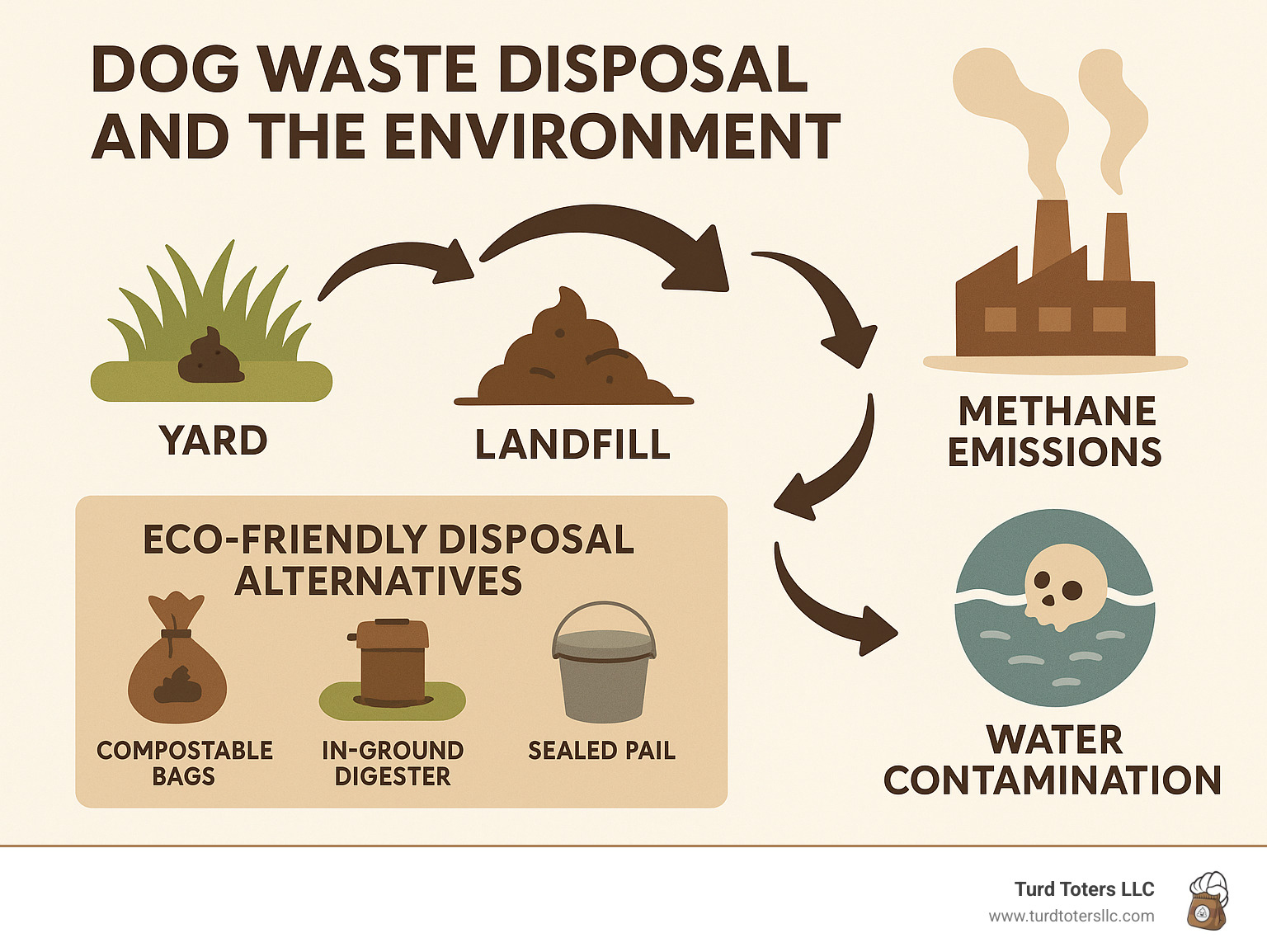
The problem goes beyond just keeping your yard clean. When pet waste ends up in landfills, it decomposes extremely slowly in anaerobic conditions, creating methane – a harmful greenhouse gas that contributes to climate change. Even worse, improperly disposed waste can contaminate water sources with dangerous bacteria and parasites.
But here’s the good news: choosing the right disposal method for your situation can eliminate odors, protect public health, and reduce your pet’s carbon pawprint. Whether you prefer DIY solutions or professional services, there are proven options that make cleanup hassle-free.
Why Proper Dog Waste Disposal Matters
Let’s be honest – nobody enjoys talking about dog poop. But understanding why proper dog waste disposal matters can transform how you think about this daily chore. The impact goes way beyond keeping your shoes clean.
Environmental & Climate Impact
Your dog’s waste contributes to what experts call a “carbon pawprint,” and the numbers might surprise you. When dog waste ends up in landfills, it creates methane gas – which is 25 times more harmful to our atmosphere than carbon dioxide.
Think about it this way: with 900 million dogs worldwide producing billions of pounds of waste each year, that’s a lot of methane floating into our air. Most countries, including the United States, have committed to the Paris Agreement to fight climate change. Every small action we take – including how we handle dog waste disposal – adds up to make a real difference.
Our landfills are already struggling with overload, and pet waste that sits there for decades without properly breaking down only makes the problem worse. The good news? Better disposal methods can dramatically reduce your pet’s environmental impact.
Public Health Concerns
Here’s where things get serious. Dog waste isn’t just gross – it’s genuinely dangerous to human health. Pet waste carries nasty bacteria like E. coli and parasites such as roundworms that can make people very sick, especially young children who play in yards and parks.
But the problem doesn’t stay where your dog left it. When it rains, contaminated waste gets washed into storm drains, which flow directly into our local rivers, lakes, and streams without any treatment. This creates a contamination cycle that affects drinking water sources and the places where families swim and fish.
The bacteria and parasites in dog waste are surprisingly tough – they can survive in soil and water for months, creating health risks that last long after the original mess is gone. This is why proper dog waste disposal isn’t just about being a good neighbor – it’s about protecting public health in your entire community.
Dog Waste Disposal Methods Explained
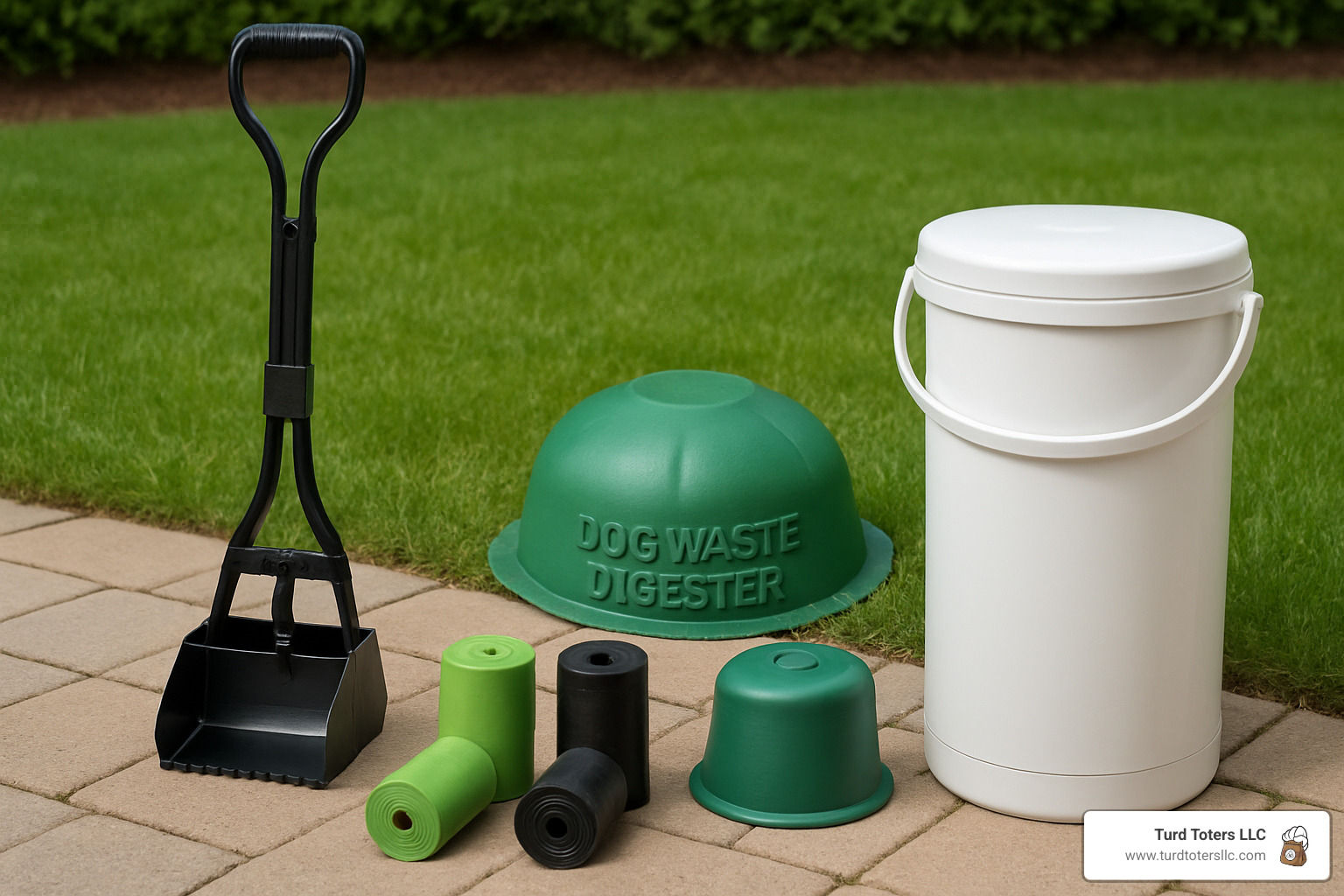
Finding the right dog waste disposal method can feel overwhelming with so many options available. The good news? Each approach has its place, and the best choice depends on your living situation, budget, and how much you want to help the environment.
Let’s walk through the most popular methods so you can find what works best for you and your furry friend.
Bag & Trash Basics
Most dog owners start here – grab a plastic bag, scoop the waste, and toss it in the regular trash. It’s simple, quick, and doesn’t require any special equipment or setup.
But here’s what many people don’t realize: those plastic bags can take hundreds of years to break down in landfills. Meanwhile, the waste inside creates methane gas as it decomposes, contributing to climate change. Still, if you’re dealing with local bylaws that require immediate cleanup or you’re just starting out, this method gets the job done.
When using plastic bags, choose sturdy ones to prevent messy tears. Double-bag if you’re dealing with particularly soft waste, and always check your local regulations – some cities have specific rules about how pet waste should be handled in regular trash pickup.
“Dog Waste Disposal” with Compostable & Flushable Bags
BPI-certified compostable bags offer a more environmentally friendly approach to traditional plastic. These bags break down properly in commercial composting facilities, though they won’t work in your backyard compost pile when dealing with dog waste.
The price difference is smaller than you might expect – around $67.75 for 2,000 standard bags versus $89.50 for the same amount of compostable options. That extra cost helps reduce the plastic burden on our landfills.
Now, about those “flushable” options you might see advertised – proceed with caution. Despite what some marketing claims suggest, most municipal water treatment systems aren’t designed to handle pet waste. Flushing can contaminate water sources and may actually violate local regulations in your area.
For step-by-step guidance on proper scooping techniques that work with any bag type, our dog poop removal tips cover all the basics.
In-Ground Digesters (“Dog Waste Disposal” Underground)
Think of in-ground digesters like the Doggie Dooley as a mini septic tank for your yard. These clever systems use water and enzyme tablets to break down waste naturally, turning it into liquid that soaks harmlessly into the surrounding soil.
The setup is straightforward: dig a hole according to the specifications, install the galvanized steel tank with its foot-operated lid, and you’re ready to go. Each day, you add collected waste along with some water. Once a week, drop in an enzyme tablet per dog, and natural bacteria do the heavy lifting.
These systems handle waste from up to 2 large dogs or 4 small dogs and have been manufactured in the USA for over 50 years. The upfront cost runs around $40-60, and then you just need to budget for enzyme tablets.
The benefits are compelling: no more trips to trash bins, dramatically reduced plastic bag usage, and year-round operation. But there are important limitations to consider. Your soil needs proper drainage – hard clay or very sandy soil won’t work well. The system also requires regular maintenance with those enzyme tablets, and you might notice some odors when opening the lid.
For detailed technical information about these septic-style systems, scientific research shows how effective they can be in the right conditions.
Modern Sealed Systems
Sealed pail systems bring space-age technology to an age-old problem. These containers use multi-layer film technology to lock odors inside, making them perfect for apartment dwellers or anyone who wants to store waste temporarily without the smell.
Systems like the Pet Genie hold impressive amounts – up to 15 medium dog diapers worth of waste – with refills lasting up to 4 months for a single dog. The UV-protected plastic works both indoors and outdoors, while the sliding odor seal lever keeps everything contained.
What’s particularly nice about these systems is their environmental consideration. Many use 65% recycled plastic in their bag production, and the multi-layer refill film creates an effective odor barrier without requiring frequent bag changes.
The dimensions (about 30cm x 24cm x 47cm) make them manageable for most spaces, and at under 2kg, they’re easy to move around as needed.
| Method | Best For | Environmental Impact | Maintenance |
|---|---|---|---|
| Plastic Bags | Quick cleanup, local bylaws | High (plastic waste, methane) | None |
| Compostable Bags | Eco-conscious owners | Lower (biodegradable) | None |
| In-Ground Digesters | Permanent homes, suitable soil | Lowest (natural breakdown) | Weekly enzymes |
| Sealed Systems | Apartments, odor control | Medium (reduced bag usage) | Monthly refills |
Community & Public Solutions
Community pet waste stations make a huge difference in keeping public areas clean. These installations typically include weather-resistant bag dispensers, large collection bins with 18.75-liter capacity, and mounting hardware that can attach to posts or existing structures.
The key to successful community stations is consistent maintenance. Bins need regular emptying, dispensers need restocking, and the entire system benefits from lockable mechanisms to prevent tampering or vandalism.
Many communities are choosing sustainable options like the Frost 2011 pet waste disposal bin, made from 100% recycled polyethylene. These demonstrate how public solutions can be both functional and environmentally responsible.
For property managers and business owners looking to implement these solutions, our commercial dog waste removal services can handle everything from installation to ongoing maintenance, keeping community areas clean without the administrative hassle.
Eco-Friendly Practices & Regulations
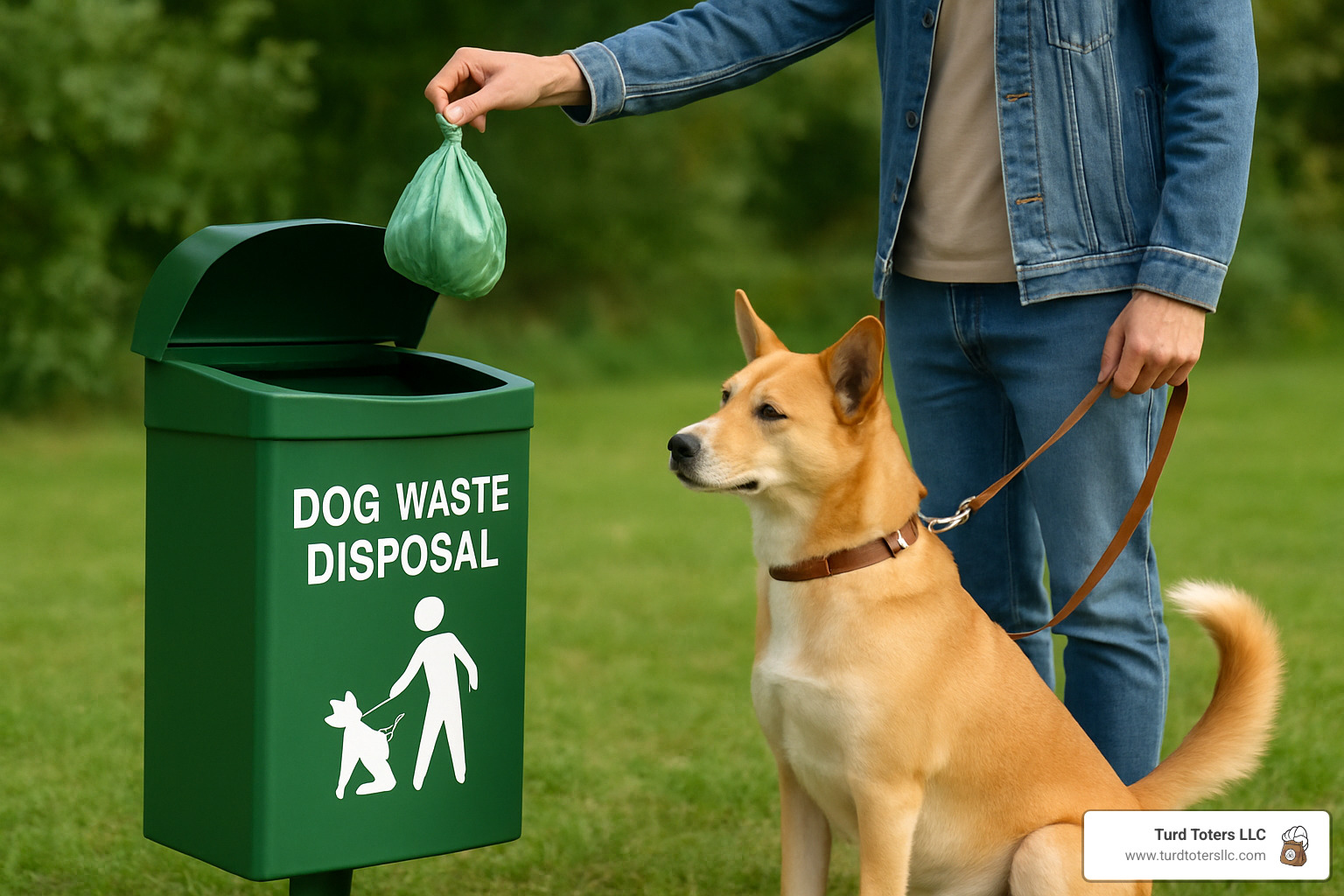
Making your dog waste disposal routine more eco-friendly doesn’t have to be complicated or expensive. Small changes in how you handle pet waste can make a real difference for the environment while keeping your yard clean and healthy.
The key is understanding what works in your specific situation and staying within local rules. Many pet owners are surprised to learn that simple equipment upgrades and smarter shopping habits can cut their environmental impact significantly.
Cutting Your Carbon Pawprint
Your pet’s environmental footprint starts with the tools and methods you choose for cleanup. Investing in quality equipment like a long-handled pooper scooper means you’ll use fewer plastic bags over time. These tools last for years and make the job easier too.
Smart shopping habits can reduce packaging waste dramatically. Buying bags in bulk cuts down on individual packaging, and choosing products made from recycled materials supports the circular economy. Many pet stores now offer recycled content bags that work just as well as traditional options.
For the DIY-minded, creating your own composting system opens up interesting possibilities. You can build an effective in-ground composter using a large plastic garbage can with holes drilled in the sides and bottom. This system works similarly to commercial digesters but costs much less.
Some pet owners set up dedicated worm farms specifically for pet waste, though these should always be kept separate from any food gardens. Adding septic-tank starter to these systems helps speed up the natural bacterial breakdown process.
Diet plays a role too – higher-quality pet foods often result in smaller waste volumes and better digestive health overall. Your veterinarian can recommend nutrition approaches that support your pet’s digestive system while potentially reducing cleanup frequency.
If you prefer professional help with eco-friendly practices, our residential dog waste removal service uses sustainable methods and provides weekly cleanup without the DIY effort.
The Enviro Pet Waste Network connects communities nationwide that are working to divert pet waste from landfills through innovative local programs.
Navigating Local Rules
Local regulations around pet waste vary widely, so it’s worth spending a few minutes researching what applies in your area. Most communities have mandatory cleanup requirements for public spaces, with fines that can range from $25 to several hundred dollars for violations.
HOA rules often go beyond city requirements, specifying exactly how and where pet waste can be disposed of on your property. Some neighborhoods prohibit certain disposal methods or require specific types of containers.
Water protection laws are becoming stricter as communities recognize the link between pet waste and water contamination. These regulations typically include penalties for storm drain contamination and may require setbacks from wells or waterways. Many areas now prohibit flushing pet waste due to treatment plant limitations.
The good news is that most local rules are designed to be practical rather than burdensome. Communities often tie pet waste regulations to existing leash laws, creating a comprehensive framework for responsible pet ownership that protects both public health and the environment.
Setting Up & Maintaining Home Systems
Getting your dog waste disposal system up and running properly makes all the difference between success and frustration. The key is matching your setup to your specific situation and staying consistent with maintenance.
Choosing the Right System
Your perfect disposal solution depends on several important factors that work together. Yard size plays a huge role – if you have a large property, an in-ground digester might be perfect, while apartment dwellers need portable options like sealed pails.
Dog count matters more than you might think. The Doggie Dooley 3000 handles up to 2 large dogs or 4 small dogs comfortably, but beyond that, you’ll need multiple systems or a different approach entirely. A single Pet Genie pail works well for one dog but fills quickly with multiple pets.
Your soil type can make or break an in-ground system. Clay soil that doesn’t drain well will cause problems, while sandy soil might not provide enough structure. Before digging, test your drainage by filling a hole with water and seeing how quickly it disappears.
Climate affects enzyme activity significantly. Freezing temperatures slow down the bacterial breakdown process, so northern climates need extra enzyme tablets during winter months. Budget considerations include both upfront costs and ongoing expenses like enzyme tablets or refill film.
Don’t forget about local regulations – some areas restrict certain disposal methods, and physical limitations matter too. If mobility is an issue, our weekly dog poop removal service handles everything for you.
Care & Maintenance Hacks for Dog Waste Disposal
Proper maintenance keeps your system working smoothly and odor-free. In-ground digesters need daily attention – add water to keep the contents moist and use one enzyme tablet per dog weekly. After heavy rains, check that drainage is still working properly.
Avoid harsh chemicals around your digester since they kill the beneficial bacteria that break down waste. During winter months, bacterial activity slows down, so add extra enzymes to keep things moving.
Sealed pail systems need different care. Replace the refill film every 4 months for one dog, or more frequently with multiple pets. Clean the exterior regularly with mild soap and warm water, and make sure the sliding seal operates smoothly. Keep the system in shaded areas to protect the UV-resistant plastic.
DIY composters benefit from weekly applications of septic-tank starter, which costs just $2-3 per packet. Add chopped yard waste to improve the composting process, and monitor moisture levels – the contents should feel like a wrung-out sponge. In sandy soil, line your composter with hardware cloth to prevent collapse.
A simple maintenance schedule keeps everything on track: add waste and water daily to digesters, add enzyme tablets or starter weekly, check system function monthly, and winterize systems seasonally in cold climates. Consistency prevents problems before they start.
Frequently Asked Questions about Dog Waste Disposal
Let’s tackle the most common questions homeowners have about dog waste disposal. These practical answers will help you make informed decisions about keeping your yard clean and safe.
What’s the safest way to compost dog poop?
Composting dog waste safely requires serious attention to detail because of the harmful bacteria and parasites lurking in pet waste. The USDA has strict guidelines for good reason – we’re talking about E. coli, roundworms, and other nasties that can make your family sick.
The golden rule: Never, ever use finished dog waste compost on anything edible. This means keeping it far away from your vegetable garden, herb patches, or fruit trees. The finished compost is only suitable for ornamental plants like flower beds and shrubs.
For a DIY approach, dig a hole about 3 feet wide and 3 feet deep. Add some drainage material at the bottom, then use septic-tank starter to speed up the breakdown process. The compost needs to reach temperatures above 140°F to kill pathogens, and you’ll need to let it work for a minimum of 2 years before it’s safe to use.
Always wear gloves when handling the compost and wash your hands thoroughly afterward. It’s a lot of work, which is why many homeowners prefer simpler disposal methods or professional services.
How often should I empty a sealed disposal pail?
Sealed pail systems are pretty convenient once you understand their rhythm. A Pet Genie system with one dog typically needs a refill film replacement every 4 months. If you’ve got multiple dogs, you’re looking at changing it every 2-3 months depending on how big your pups are and how often you’re scooping.
Watch for these signs that it’s time for a fresh refill: the film has reached the end of the roll, odors start escaping even when the pail is properly sealed, or the lid becomes difficult to close properly. Don’t wait until it’s completely full – that makes the changeover much messier.
The beauty of these systems is their predictability. Once you get into a routine, you’ll know exactly when to order replacement film. Most people find it helpful to mark their calendar or set a phone reminder.
Are “biodegradable” dog-poop bags really green?
Here’s where things get tricky – not all “biodegradable” bags live up to their eco-friendly promises. The marketing can be misleading, and some bags labeled as biodegradable still leave plastic residue or only break down under very specific conditions.
Look for BPI-certified compostable bags if you want the real deal. These meet strict ASTM standards and actually break down in commercial composting facilities. Yes, they cost more – about $89.50 for 2,000 bags compared to $67.75 for standard plastic – but they’re genuinely better for the environment.
Standard “biodegradable” bags often disappoint because they need perfect conditions to break down properly. In landfills, where most trash ends up, even the good compostable bags struggle because of the anaerobic conditions.
Before investing in expensive eco-friendly bags, check what your local composting facility actually accepts. Some facilities won’t take any bags with pet waste, regardless of certification. You might find that using a sturdy reusable scooper and minimizing bag usage entirely is the most practical green approach.
The bottom line? Dog waste disposal doesn’t have to be complicated, but it’s worth understanding your options to make the choice that works best for your family and the environment.
Conclusion
Taking responsibility for proper dog waste disposal isn’t just about keeping your yard looking good – it’s about protecting the health of your family, your neighbors, and the environment we all share. Every method we’ve discussed, from traditional bagging to innovative in-ground digesters, works when you stay consistent and follow the best practices.
The beauty of having so many options is that there’s truly something for every situation. Maybe you’re drawn to the eco-friendly approach of compostable bags, or perhaps the convenience of a sealed pail system fits your busy lifestyle better. Some folks love the set-it-and-forget-it nature of underground digesters, while others prefer the simplicity of professional maintenance.
For our neighbors here in Georgia’s Augusta area – including Evans, Grovetown, Martinez, and all the surrounding communities – there’s an even easier path forward. When life gets busy and yard maintenance feels overwhelming, professional services can step in to handle the messy work. Regular pickup schedules mean you can focus on enjoying quality time with your furry family members instead of worrying about cleanup.
The truth is, the best disposal method is the one you’ll actually stick with. Whether that’s a high-tech system or good old-fashioned scooping and bagging, consistency matters more than perfection. Your commitment to proper waste management creates a ripple effect that benefits everyone around you.
Ready to reclaim your weekends and say goodbye to yard cleanup stress? Our comprehensive dog waste management service takes care of everything with reliable, professional maintenance that keeps your outdoor space clean and enjoyable year-round.